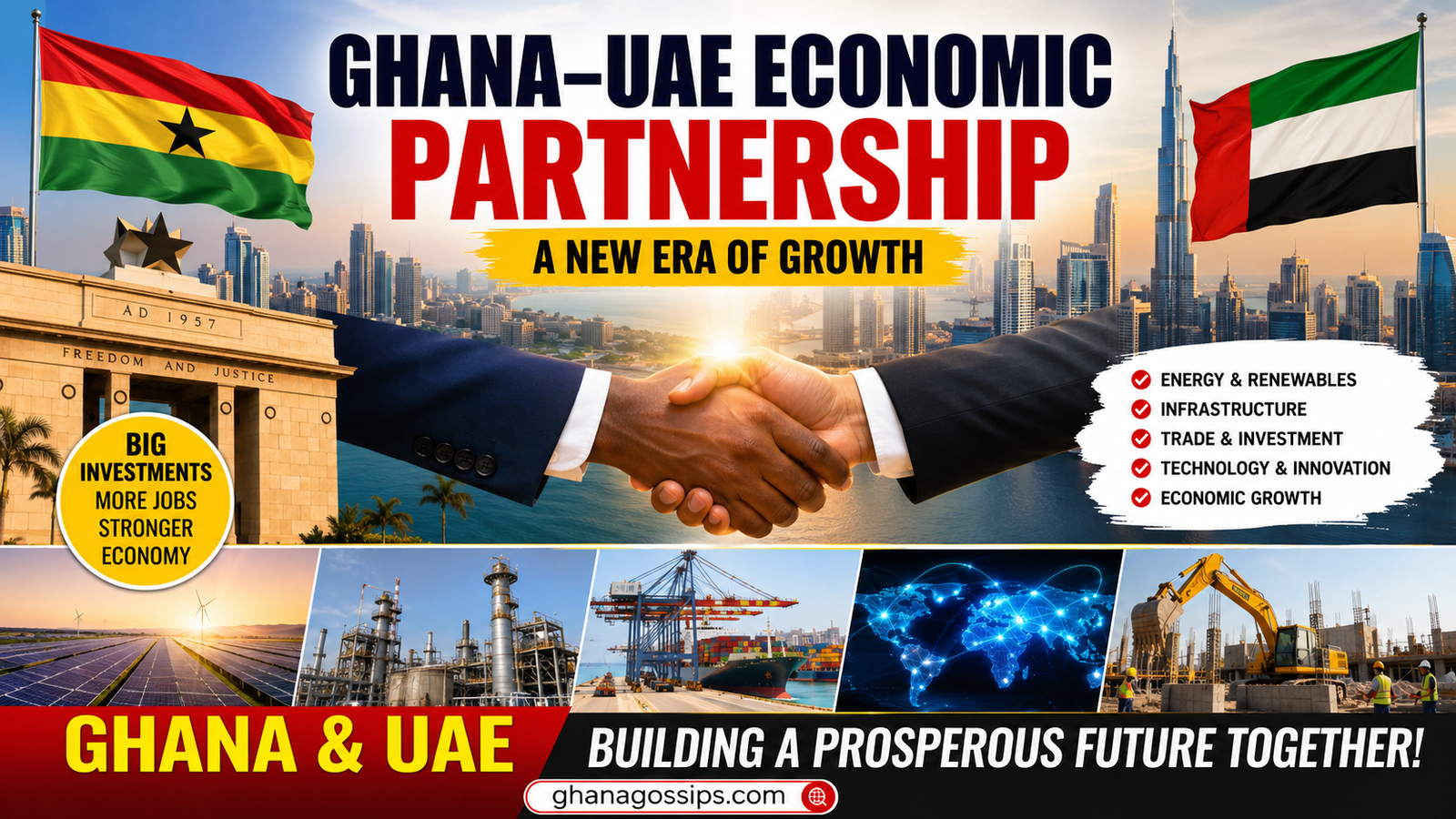
Ghana and the UAE Economic Cooperation discussions focus on energy, trade, infrastructure, and long-term economic growth.
The presidency has announced stronger energy and economic cooperation talks between Ghana and the United Arab Emirates, signalling a major step toward improving bilateral relations, investment opportunities, and long-term economic growth. The discussions are expected to focus on energy development, infrastructure projects, trade partnerships, renewable energy investment, and financial cooperation between the two countries.
The new partnership discussions have attracted attention because the UAE remains one of the world’s leading investors in energy, technology, infrastructure, and global trade. Economic experts believe stronger cooperation between Ghana and the UAE could create jobs, attract foreign direct investment, improve energy development, and strengthen Ghana’s economy in the coming years.
How Energy Partnerships Could Benefit Ghana’s Economy
Energy partnerships between Ghana and the United Arab Emirates could provide major economic benefits by supporting electricity generation, renewable energy projects, industrial growth, and infrastructure development. The Presidency’s announcement of stronger cooperation talks has generated significant attention because energy remains one of the most important sectors driving economic development and investment opportunities worldwide.
One major benefit of the partnership could be improved energy infrastructure in Ghana. Reliable electricity supply is important for businesses, industries, hospitals, schools, and households. Economic experts believe stronger collaboration with UAE investors may help Ghana expand energy production capacity and improve power reliability across different regions of the country.
Renewable energy investment is also expected to become an important area of cooperation. The UAE is globally recognised for investing heavily in solar energy, clean technology, and sustainable development projects. Ghana continues exploring renewable energy opportunities to reduce dependence on traditional fuel sources and improve environmental sustainability. Experts believe renewable energy projects could help increase electricity access while supporting climate-friendly development.
The energy partnership may also attract more foreign direct investment into Ghana’s economy. Large-scale energy projects often create opportunities in construction, transportation, engineering, technology, and industrial services. This could lead to job creation and increased economic activity across multiple sectors.
Oil and gas cooperation may also strengthen under the discussions. Ghana continues developing its oil and gas industry, and UAE companies have significant global experience in energy exploration, refining, and infrastructure development. Improved cooperation could support technology transfer, industrial expansion, and investment within Ghana’s energy sector.
The partnership may also improve Ghana’s long-term industrial growth strategy. Stable energy supply is important for manufacturing, mining, digital technology, and business expansion. Authorities believe stronger energy infrastructure could help Ghana become more competitive within African and international markets.
Economic analysts believe successful energy cooperation between Ghana and the UAE could strengthen economic growth, improve investor confidence, and support national development goals. According to Reuters Africa News, Ghana and the UAE continue strengthening discussions focused on energy, investment, and economic cooperation in 2026.
Why the UAE Is Becoming an Important Investment Partner for Ghana
The United Arab Emirates is becoming an increasingly important investment partner for Ghana as both countries continue strengthening economic cooperation and exploring new opportunities in energy, trade, infrastructure, technology, and industrial development. The UAE has established itself as one of the world’s leading business and investment centres, making its partnerships highly valuable for developing economies seeking foreign direct investment and economic growth.
One major reason the UAE is important for Ghana is its strong global investment capacity. UAE companies and sovereign investment funds have invested billions of dollars worldwide in sectors such as energy, aviation, ports, renewable energy, tourism, real estate, logistics, and digital technology. Ghana is viewed as an attractive destination because of its political stability, growing economy, natural resources, and expanding consumer market.
The UAE’s experience in infrastructure development is also important for Ghana’s long-term development goals. UAE investors have participated in major international projects involving airports, ports, highways, industrial zones, and smart city developments. Economic experts believe stronger partnerships could help Ghana improve transportation systems, logistics infrastructure, and industrial capacity.
Trade relations between Ghana and the UAE are also expected to grow. Dubai remains one of the world’s biggest global trade hubs connecting Africa, Asia, Europe, and the Middle East. Stronger economic ties could improve Ghana’s export opportunities and help local businesses access larger international markets.
Energy cooperation is another major factor behind the growing partnership. Ghana continues seeking investment to improve electricity generation, renewable energy production, and oil and gas development. UAE companies are globally recognised for their expertise in both traditional energy and renewable energy sectors.
Technology and innovation partnerships may also increase under the cooperation discussions. The UAE continues investing heavily in artificial intelligence, fintech, digital transformation, and smart infrastructure, areas that Ghana is also exploring to support economic modernisation.
Economic analysts believe the growing partnership between Ghana and the UAE could improve investment flows, create jobs, and strengthen economic development over the long term. According to Reuters Africa News, Ghana and the UAE continue expanding discussions focused on energy, trade, and economic cooperation in 2026.
How Trade Relations Between Ghana and the UAE Could Expand
Trade relations between Ghana and the United Arab Emirates could expand significantly as both countries continue strengthening economic cooperation discussions focused on investment, energy, infrastructure, technology, and international business development. Economic experts believe stronger trade partnerships may help improve export opportunities, increase foreign direct investment, and strengthen Ghana’s position within global markets.
One major advantage of stronger trade relations is improved access to international business networks. The UAE, especially Dubai, remains one of the world’s leading trade and logistics centres connecting Africa, Asia, Europe, and the Middle East. Ghanaian businesses may benefit from increased access to international markets through stronger partnerships with UAE companies and investors.
Ghana exports products such as gold, cocoa, oil, agricultural products, and minerals, while the UAE is known for global trade, logistics, aviation, energy investment, and financial services. Expanding trade cooperation could help increase commercial activities between businesses in both countries and create opportunities across multiple industries.
The transportation and logistics sectors may also benefit from stronger economic ties. Improved aviation cooperation, shipping partnerships, port development, and trade infrastructure could help reduce trade barriers and support faster movement of goods between Ghana and international markets.
Technology and digital trade opportunities are also expected to grow. The UAE continues investing heavily in digital innovation, artificial intelligence, fintech, and smart infrastructure. Ghana is also expanding its digital economy, creating opportunities for collaboration in technology and business development.
Tourism and hospitality industries could also benefit from stronger bilateral relations. Increased business cooperation may encourage tourism investment, hotel development, and improved travel connections between the two countries.
Economic analysts believe stronger Ghana-UAE trade relations could improve investor confidence and support long-term economic growth. According to Reuters Africa News, Ghana and the UAE continue expanding discussions focused on energy, trade, and economic partnerships in 2026.
Read also:
- Reuters Africa Business
- BBC Business News
- Bloomberg Markets
- World Bank Ghana Overview
- International Monetary Fund Ghana
- African Development Bank Ghana
- CNBC International Business
- Financial Times Global Economy
- World Trade Organization
- UAE Ministry of Economy
How Renewable Energy Cooperation Could Benefit Ghana
Renewable energy cooperation between Ghana and the United Arab Emirates could provide major long-term benefits for Ghana’s economy, energy sector, and environmental sustainability goals. As the world increasingly shifts toward clean energy and climate-friendly development, many countries are investing heavily in renewable energy technologies such as solar power, wind energy, battery storage systems, and green infrastructure.
The UAE has become one of the leading global investors in renewable energy through large-scale projects and international partnerships. Ghana is also exploring opportunities to improve renewable energy production and reduce dependence on traditional energy sources. Experts believe stronger cooperation could help Ghana accelerate clean energy development and improve electricity access nationwide.
One of the biggest advantages of renewable energy cooperation is the potential improvement in electricity reliability. Some businesses and households in Ghana continue facing electricity challenges that affect productivity and economic growth. Increased investment in solar power and renewable energy infrastructure may help improve stable power supply and support industrial expansion.
Renewable energy projects could also create employment opportunities in engineering, construction, technology, maintenance, and energy services. Experts believe clean energy investment may encourage skills development and innovation within Ghana’s growing energy sector.
Environmental sustainability is another important benefit of renewable energy cooperation. Clean energy projects can help reduce carbon emissions, support climate change goals, and improve environmental protection efforts. Many governments and international institutions are encouraging renewable energy investments to support sustainable economic growth.
The partnership may also improve Ghana’s attractiveness to international investors. Countries with strong renewable energy strategies are often viewed as better long-term investment destinations because reliable and sustainable energy infrastructure supports industrial development and business expansion.
Technology transfer and innovation could also increase through cooperation with UAE companies experienced in advanced renewable energy systems and smart infrastructure projects. Ghana may benefit from new technologies, technical expertise, and international financing opportunities linked to clean energy development.
Economic analysts believe renewable energy cooperation between Ghana and the UAE could strengthen energy security and support future economic growth. According to Reuters Africa News, Ghana and the UAE continue expanding cooperation discussions focused on energy, investment, and sustainable development in 2026.
How UAE Investments Could Create Jobs in Ghana
Investments from the United Arab Emirates could create significant employment opportunities in Ghana as both countries continue discussions focused on energy, infrastructure, trade, technology, and economic cooperation. Foreign direct investment remains one of the key drivers of economic growth because large-scale projects often stimulate business expansion, industrial development, and workforce demand across multiple sectors.
One of the biggest areas where UAE investments could create jobs is the energy sector. Renewable energy projects, electricity infrastructure, oil and gas development, and industrial energy systems often require engineers, construction workers, electricians, technicians, transport operators, and maintenance staff. Increased investment in these sectors could improve employment opportunities for skilled and unskilled workers across Ghana.
Infrastructure projects linked to UAE investments could also generate thousands of jobs. Construction of roads, airports, ports, industrial parks, logistics centres, and commercial facilities may create opportunities for contractors, architects, engineers, drivers, security personnel, and local suppliers. Infrastructure development often stimulates economic activities in surrounding communities as businesses expand to support large projects.
Technology and digital economy investments could also benefit Ghana’s growing youth population. The UAE continues investing heavily in artificial intelligence, fintech, smart infrastructure, and digital transformation. Collaboration in these sectors could help create jobs in software development, digital services, online businesses, telecommunications, and technology startups.
Tourism and hospitality industries may also experience growth through stronger Ghana-UAE economic cooperation. Hotel developments, aviation partnerships, tourism investments, and international business travel may increase employment opportunities in accommodation, transport, food services, and entertainment sectors.
Small businesses and local entrepreneurs could also benefit indirectly from UAE investments. Increased industrial and commercial activity often creates demand for transportation services, food supply, construction materials, maintenance services, and retail businesses within local communities.
Economic experts believe successful investment partnerships between Ghana and the UAE could strengthen employment growth, improve skills development, and support long-term economic transformation. According to Reuters Africa News, Ghana and the UAE continue strengthening economic cooperation discussions focused on investment, energy, and development in 2026.
Why Foreign Investment Is Important for Ghana’s Development
Foreign investment remains extremely important for Ghana’s economic development because it helps support infrastructure projects, industrial growth, job creation, technology transfer, and long-term national progress. The stronger cooperation discussions between Ghana and the United Arab Emirates highlight how international partnerships can contribute to economic transformation and development opportunities across multiple sectors.
One major advantage of foreign investment is increased capital inflow into the economy. Large-scale projects in energy, transportation, mining, manufacturing, tourism, and technology often require significant financial resources that may not always be available locally. International investors help provide funding needed for major development projects that can improve economic growth and public infrastructure.
Foreign investment can also create employment opportunities for citizens. New businesses, factories, construction projects, energy developments, and industrial facilities often require workers across different skill levels. Economic experts believe increased investment can reduce unemployment and support income generation for local communities.
Technology transfer is another important benefit linked to international partnerships. Foreign companies often introduce modern technologies, management systems, industrial techniques, and professional expertise that can improve productivity and innovation within local industries. Ghana may benefit from advanced technology in areas such as renewable energy, digital services, logistics, transportation, and industrial production.
Infrastructure development is also strongly connected to foreign investment. Roads, airports, ports, industrial parks, energy systems, telecommunications infrastructure, and smart city projects often depend on international partnerships and financing support. Improved infrastructure may help strengthen Ghana’s competitiveness within African and global markets.
Foreign investment may also improve business confidence and encourage economic diversification. Ghana continues seeking to expand industries beyond traditional sectors such as gold, cocoa, and oil by attracting investment into the manufacturing, renewable energy, fintech, tourism, and technology sectors.
Economic analysts believe successful international partnerships could help Ghana achieve long-term economic growth and sustainable development goals. According to Reuters Africa News, Ghana and the UAE continue expanding cooperation discussions focused on investment, energy, and economic development in 2026.
How Infrastructure Development Could Improve Ghana’s Economy
Infrastructure development could play a major role in improving Ghana’s economy as stronger cooperation discussions with the United Arab Emirates continue focusing on investment, transportation, energy, logistics, and industrial growth. Economic experts believe modern infrastructure remains one of the most important foundations for sustainable economic development and international competitiveness.
One of the biggest benefits of infrastructure development is improved transportation systems. Better roads, highways, ports, airports, and railway networks can reduce transportation costs, improve business efficiency, and support faster movement of goods and services across the country. This may help businesses expand operations and increase productivity.
Port and logistics development could also strengthen Ghana’s role as a regional trade hub within West Africa. The UAE has extensive experience in global logistics and port management, making infrastructure cooperation potentially valuable for Ghana’s trade and export sectors. Improved logistics systems may help local businesses access international markets more efficiently.
Energy infrastructure remains another important area linked to economic growth. Reliable electricity systems are essential for manufacturing, mining, healthcare, education, and technology industries. Investment in power generation, renewable energy, and energy distribution could improve industrial productivity and support business expansion.
Digital infrastructure and technology systems may also improve under stronger international partnerships. Expanding internet connectivity, smart infrastructure, telecommunications systems, and digital services could support innovation, fintech growth, online businesses, and technology-driven economic development in Ghana.
Infrastructure projects often create employment opportunities during both construction and operational phases. Engineers, construction workers, transport operators, architects, technicians, and local suppliers may benefit from increased development activities across different sectors.
Tourism and hospitality industries may also grow through improved infrastructure. Better airports, roads, hotels, and urban development projects can attract more tourists, investors, and international business activities into the country.
Economic analysts believe modern infrastructure is critical for long-term national development and economic competitiveness. According to Reuters Africa News, Ghana and the UAE continue strengthening discussions focused on infrastructure, energy, investment, and economic cooperation in 2026.
The Role of International Partnerships in Ghana’s Economic Growth
International partnerships continue playing a major role in Ghana’s economic growth as the country works to attract investment, improve infrastructure, strengthen trade, and modernise key sectors of the economy. The recent cooperation discussions between Ghana and the United Arab Emirates highlight how global partnerships can support long-term national development and economic transformation.
One of the biggest advantages of international partnerships is access to investment and financing opportunities. Many large infrastructure projects, energy developments, industrial programs, and technology initiatives require substantial financial support that can be provided through foreign investors, development institutions, and international business partnerships.
International cooperation can also support technology transfer and innovation. Countries and companies with advanced industrial expertise often introduce modern technologies, digital systems, renewable energy solutions, and professional training programmes that help improve productivity and efficiency within local industries.
Trade partnerships remain another important factor in economic growth. Strong international relations may help Ghana increase exports, expand business opportunities, and improve market access for local products such as cocoa, gold, oil, agricultural goods, and manufactured products. Global trade cooperation can strengthen economic diversification and reduce dependence on limited export sectors.
Infrastructure development often depends heavily on international collaboration. Roads, ports, airports, industrial parks, energy systems, telecommunications networks, and logistics infrastructure frequently involve partnerships between governments, investors, and multinational companies. Improved infrastructure can help boost industrial growth and strengthen Ghana’s competitiveness within African and global markets.
International partnerships may also create employment opportunities and improve workforce skills through business expansion, industrial projects, and educational cooperation. Training programmes and knowledge-sharing initiatives can help strengthen local expertise in areas such as engineering, technology, finance, energy, and digital innovation.
Economic analysts believe successful international partnerships can support sustainable development and long-term economic stability. According to Reuters Africa News, Ghana continues strengthening global cooperation focused on energy, investment, infrastructure, and economic growth in 2026.
What the Future Holds for Ghana-UAE Economic Cooperation
The future of economic cooperation between Ghana and the United Arab Emirates appears promising as both countries continue discussions focused on energy, infrastructure, trade, technology, renewable energy, and investment partnerships. Economic experts believe stronger bilateral relations could create long-term opportunities for economic growth, industrial expansion, and job creation across multiple sectors.
One of the key areas expected to shape future cooperation is energy development. Ghana continues seeking investment to improve electricity generation, renewable energy systems, oil and gas infrastructure, and industrial power supply. UAE investors and companies have extensive global experience in energy and infrastructure projects, making future partnerships strategically important for Ghana’s economic transformation goals.
Trade relations are also expected to expand significantly in the coming years. The UAE remains one of the world’s leading business and logistics hubs connecting Africa, Asia, Europe, and the Middle East. Improved trade cooperation could help Ghana increase exports, attract international businesses, and strengthen access to global markets.
Technology and innovation partnerships may also become increasingly important. The UAE continues investing heavily in artificial intelligence, fintech, smart cities, digital transformation, and renewable energy technologies. Ghana may benefit from technology transfer, digital infrastructure development, and innovation-driven economic opportunities linked to international partnerships.
Infrastructure projects involving transportation, ports, aviation, industrial zones, and logistics systems may also improve under future cooperation agreements. Better infrastructure could help support manufacturing, tourism, trade, and business expansion throughout Ghana.
Economic analysts believe stronger Ghana-UAE cooperation could improve investor confidence, encourage industrial diversification, and strengthen Ghana’s position within regional and global markets. According to Reuters Africa News, Ghana and the UAE continue expanding discussions focused on investment, infrastructure, energy, and long-term economic development in 2026.
Read also:
- Reuters Africa Business
- BBC Business News
- Bloomberg Global Markets
- CNBC International Economy
- Financial Times Global Economy
- World Bank Ghana Overview
- International Monetary Fund Ghana
- African Development Bank Ghana
- World Trade Organization
- UAE Ministry of Economy
- International Energy Agency
- Forbes Business News
- Yahoo Finance Markets
- Trading Economics Ghana Data
- The Economist Global Economy
- S&P Global Market Intelligence
- OECD Economic Outlook
- UN Sustainable Development Goals
- Investopedia International Trade Guide
- World Economic Forum Economy
FAQ
What is Ghana-UAE economic cooperation?
‘Ghana and the UAE economic cooperation’ refers to partnership discussions focused on energy, trade, infrastructure, investment, and economic development.
Why are Ghana and the UAE strengthening cooperation?
The two countries are strengthening cooperation to improve investment opportunities, economic growth, renewable energy projects, and trade relations.
How could the partnership help Ghana’s economy?
The partnership could attract foreign investment, create jobs, improve infrastructure, and support industrial development.
What sectors are included in the cooperation talks?
The discussions include energy, renewable energy, infrastructure, trade, logistics, technology, and investment.
Could UAE investments create jobs in Ghana?
Yes, experts believe UAE investments could create employment opportunities in the energy, construction, transportation, technology, and tourism sectors.